
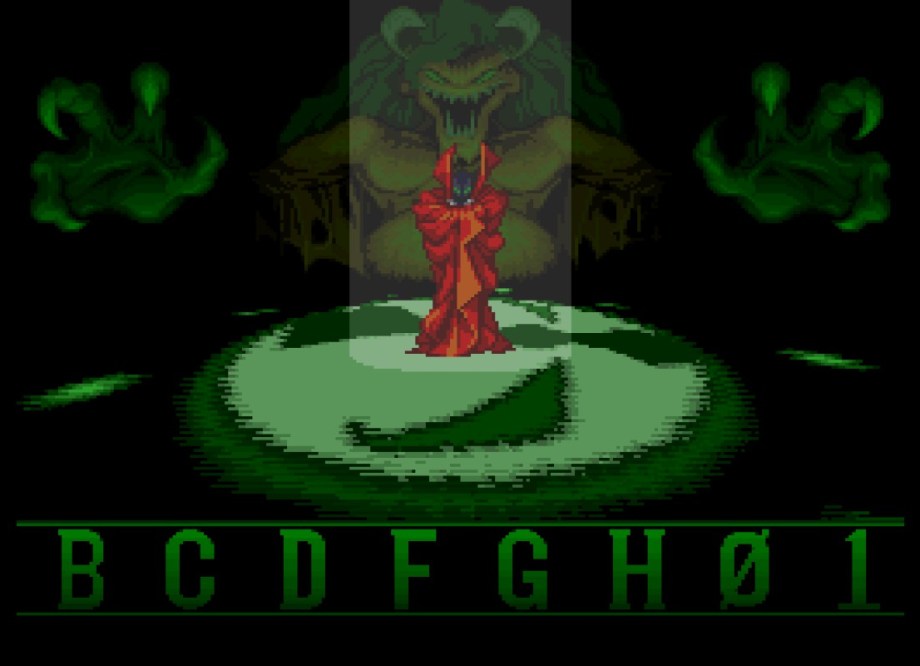
For better or worse, the 90s embraced the counterculture in its media. The alternative subgenres that were brewing earlier became more ever-present in the booming attitude era. The shades of grey between the battles of good and evil were ever present in the media of the time, and few could serve as a better mascot than the tricked undead mercenary, Al Simmons, a.k.a. Spawn. In 1995, just as the world was about to be reintroduced to the comic book character on the big screen, a video game based on the comics was released, known as Todd McFarlane’s Spawn: The Video Game.
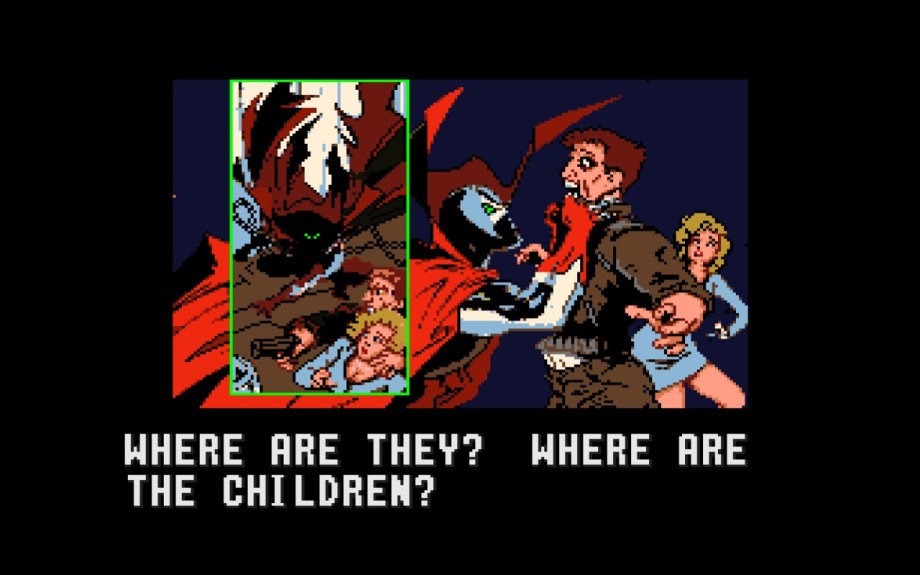
The undead enforcer on a time limit, Spawn, is back with a new task, a new foe by the name of The Mad One has kidnapped children all over the city, with his 13th victim being Al Simmons’s daughter. It is up to Spawn himself to go and right this injustice, saving his daughter in the process. Dealing with familiar faces from the forces of Heaven. Hell and Earth. Along with a bunch of other grunts in between you and The Mad One.
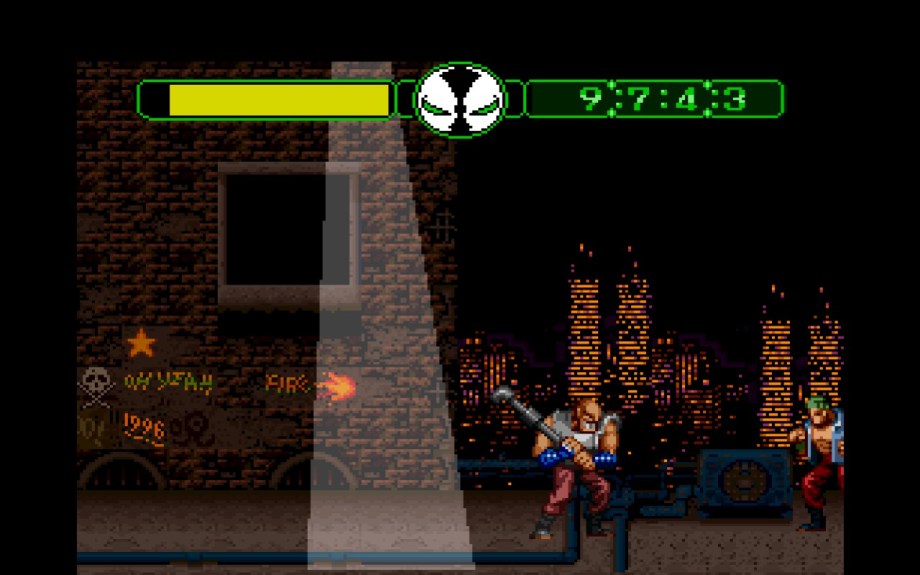
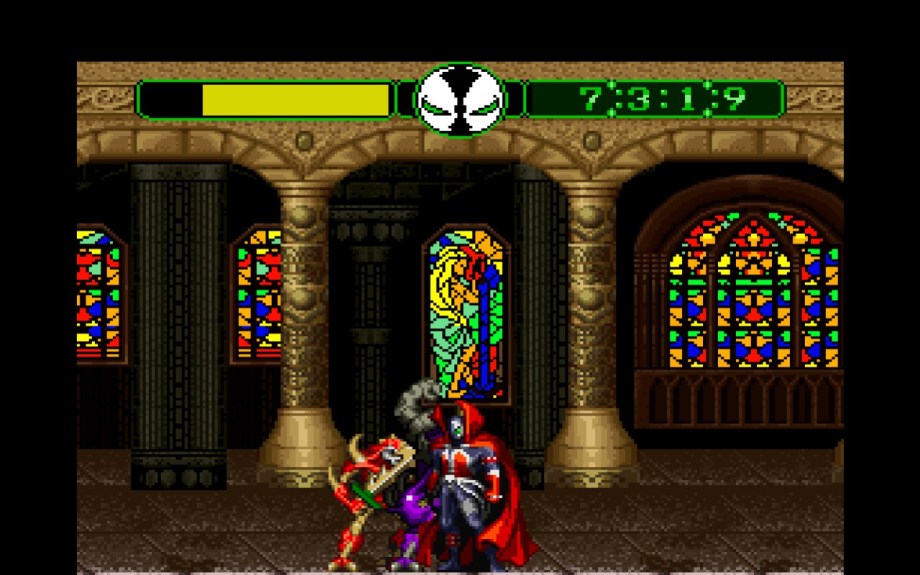
Those familiar with fighting games will feel quickly at home with Spawn; criminals and unimaginable nightmares will come at you, and you can punch and kick your way past them to the end. You’ve limited life, but death isn’t enough to get you out of your Faustian contract. As long as you’ve got seconds left on your contract, you will be able to check the ticking countdown throughout. Simmons also has some special moves, common to these Beat-Em-Up style games. Using these moves may also use up your precious seconds, so there is a bit of strategy involved in when and where you deploy them. For those who also want to enjoy the story, they can bask in the comic-book recreations that are the cut scenes.
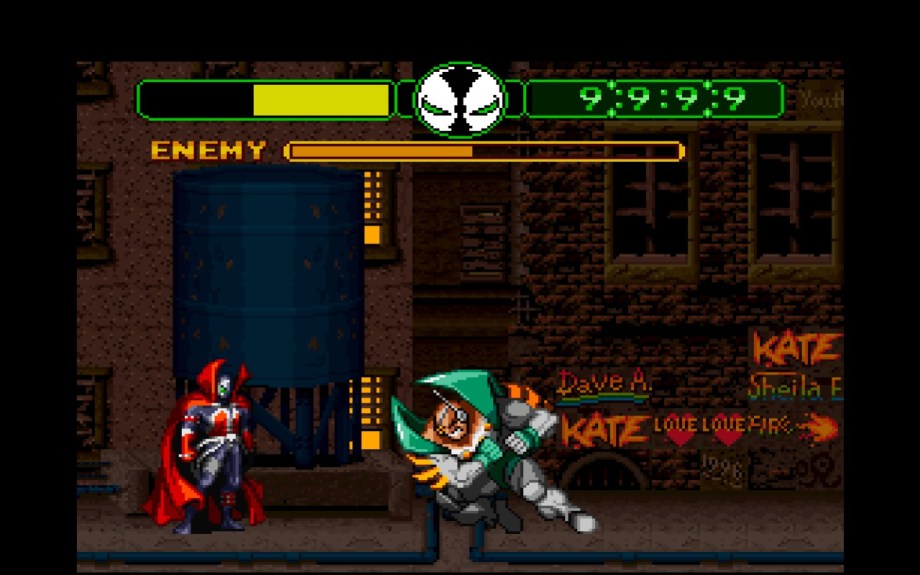
This being based on the hit comic, and just missing the film by a few years, Spawn has full use of the Super Nintendo’s 16-bit graphics space and sample-based sound chip to really tell its story. This was, of course, during the later days of the console, before the 32-bit era took off, so developers had learned some tips and tricks to get around. The score is moody and percussive, just what you’d expect from a gothic fighter. A lot of familiar faces make an appearance, like Angela, before the whole debacle around her character kicked off. Simmons will also cross paths with his boss for a stage or two. It is good stuff, on a console noted for its comic book, so if you wanted to explore these characters in a new dimension, the Super Nintendo has your chance.
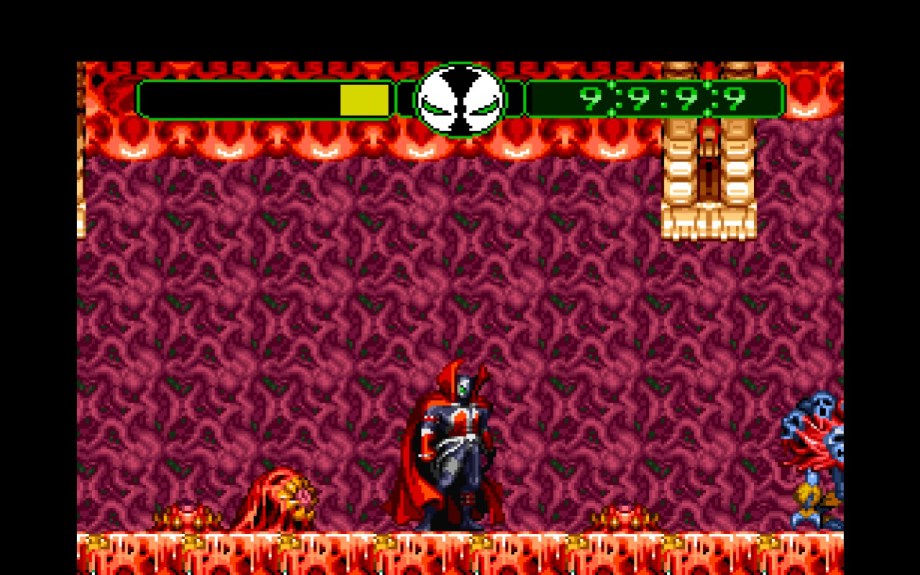
Spawn makes sense on the Super Nintendo, with its cool look and gloomy sound feeling as evocative of the mid-90s as the console itself. Another challenge for those who like the beat-em-up genre or just want to see more avenues of Simmons’ quest against all who oppose him. Spawn is another chapter, another comic book property that lends itself to a Streets of Rage style beat-em-up. Suffice it to say, Spawn is worth it if you’ve got the seconds to spare.
If you want more positive reviews delivered to the e-mail box of your choice, you can click on that little text bubble at the bottom of the screen. Do you agree or disagree? or have a suggestion for another pop-culture artefact that needs a positive light shone on it? Leave a comment in the comment box below! But remember to keep it positive!
 The Real Mr. Positive