Small Soldiers: Squad Commander (1998)

With computers rapidly entering the home space, and graphical user interfaces shrinking the gap between the computer-literate and savvy, the home computer was gradually becoming the omni-tool of a family’s life that we know it today. Entertainment packages that the whole family could genuinely enjoy were readily available, not just fast-paced shooters, but more thoughtful games that didn’t test your dexterity but your mental acumen. In 1998, the struggles of the Gorgonites and the Commando Elite served as the next dressing for the blossoming popular Real Time Strategy genre, in Small Soldiers: Squad Commander.
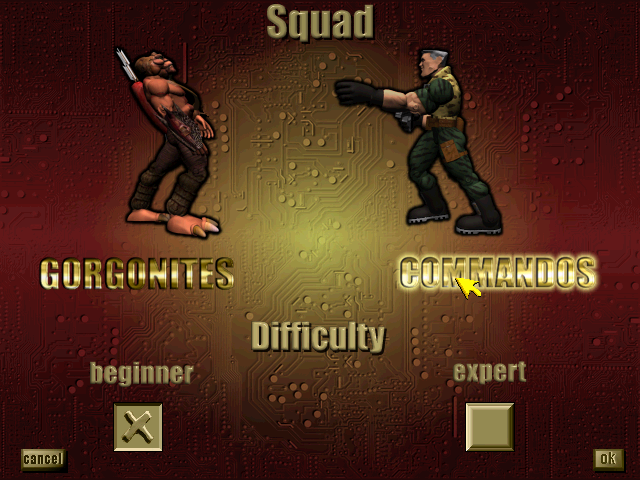
A screenshot of Small Soldiers Squad Commander, showing the character select scren
You can play as either the Gorgonites or the Commandos!

You play as either the Gorgonites or the Commando Elite as they try to dominate the scenic suburb of New Bedford, going from house to house, room to room. Reinforcements can be found in toy boxes, but they are limited. As you traverse linen closets and stairwells, the opposing side has many men and traps, but with careful cunning and the will to win, the odds are in your favour.

A screenshot of Small Soldiers Squad Commander, showing the stats for the Gorgonite fighter,, Insaniac
Each unit has strengths and weaknesses, adding another layer to the tactics!

Toy soldiers running around your home in an RTS fashion is nothing new, as the Army Men franchise has been profiting on that concept for a few years now. Recreating some later scenes of the film, you can have many duplicate copies of certain units, all sounding like the beloved voice actors of the film. Each unit will have its strengths and weaknesses, and luckily, Joe Dante managed to design six unique characters to help keep the balance up. Being inside a typical home, the missions have this skeuomorphic quality that’s fun to behold, and the Small Soldiers make quick use of it; using fire crackers to blow holes in walls, knocking out home modems communication links, and keeping a lot of the film’s humour intact.
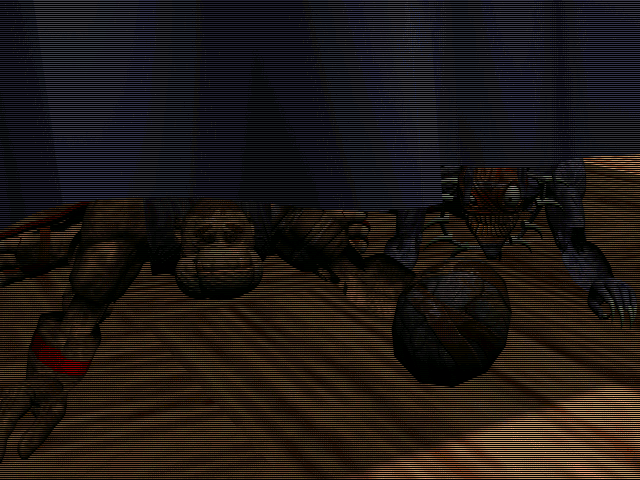
A screenshot of Small Soldiers Squad Commander, showing an in-game cutscene
The game also has C.G.I. scenes, even if they might seem primitive by today’s standards.

Base building isn’t a thing; it’s just you and your squad, manoeuvring from one side of the house to the other, but with the limited lives that can rarely be replenished, it will take some tactical know-how to win this fight. Puzzles will present themselves, too. For instance, a door might be controlled by a weight-sensitive pressure pad, which could be addressed by having one of your men stand on it (preventing them from participating in the fight) or by finding a suitable weight and placing it on the pad. Each soldier has room for one item, from the ever-useful T.N.T to keys and mission-critical items and the like, so a slight element of inventory management also lends itself to the proceedings. For an R.T.S. that is aimed at practically all ages, you don’t need to be a Clausewitz to be able to have fun here.
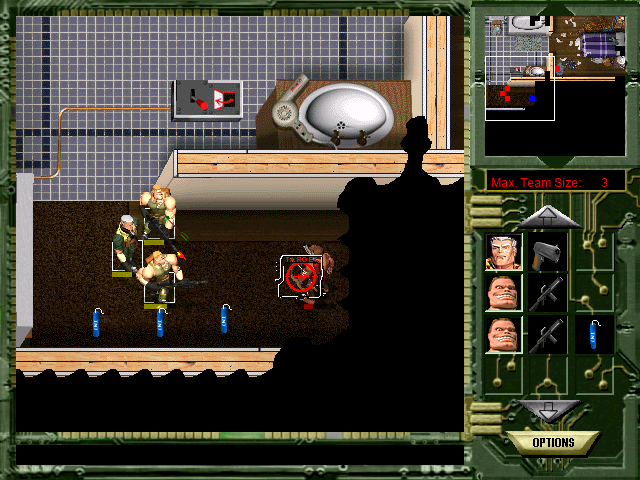
A screenshot of Small Soldiers Squad Commander, showing a level
The interface is really straight forward!

With its colourful graphics, forgiving interface and a property that is just begging to be franchised, Squad Commander is certainly a winning proposition. It goes without saying that the property lends itself to the home-based RTS that’s simple for all ages to pick up and respectively fun to play. Not entirely a cakewalk, but just interesting enough to give it a shot, regardless of your skill level. Whether you lead the Gorgonites or Commandos to victory, with Squad Commander, the war at home can truly begin.

A screenshot of Small Soldiers Squad Commander, from in game showing a battlefield
Items can be useful, but you can only carry one at a time!

If you want more positive reviews delivered to the e-mail box of your choice, you can click on that little text bubble at the bottom of the screen. Do you agree or disagree? or have a suggestion for another pop-culture artefact that needs a positive light shone on it? Leave a comment in the comment box below! But remember to keep it positive!
Spawn: The Eternal (1997)

Typically, films and T.V. offer gateways into franchises, those who got into the Game of Thrones books from the hit series, those who came back to Marvel, after their cinematic onslaught on popular culture. Even Twisted Metal, the nostalgic curiosity of yesteryear, got a second chance from the T.V. adaptation. In 1997, due to be released with the film, the video game developers behind Twisted Metal got pushed in a whole new direction of gameplay, as they tried to capture the essence and spirit of Spawn: The Eternal.

A screenshot of Spawn: The Eternal. Spawn is standing in front of a grotty building with a neon sign depicting "Neal's Dinner".
Spawn’s quest takes him to some interesting places!

Spawn: The Eternal sees you playing Al Simmons, an undead mercenary tricked by the lord of Hell into doing his bidding. Serving a limited time as an unholy agent in the battle between good and evil. Spawn: The Eternal takes Spawn on a journey through time, from contemporary New York streets to the towns of Medieval Europe and the dawn of primitive man. As you fight foes, explore, and just generally strike the balance in-between the forces of Heaven, Hell, and anyone who opposes Spawn.

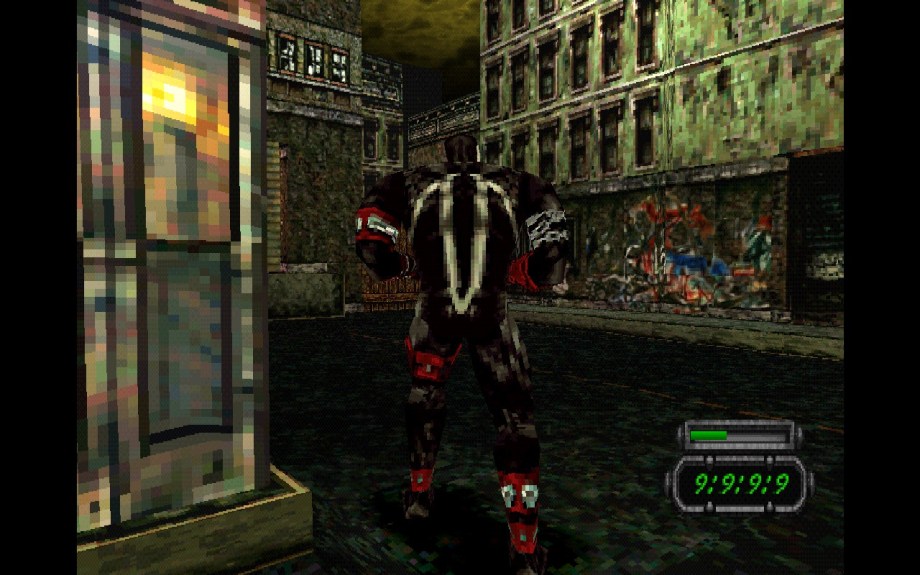
A screenshot of Spawn: The Eternal. Spawn is standing in the streets, they look green and diseased.
The streets of New York look otherworldly, a perfect fit for Spawn!

Being made by the fine folks who brought you Twisted Metal, a non-car-combat game from a car-combat company might seem a bit peculiar, but the results manage to work well, especially on a console they were familiar with. Considering how evocative of the alternative 90s style that Spawn serves as a mascot of, they make for fine bedfellows for this property. Gameplay consists of navigating almost labyrinthian levels in an early 3.D. There are buttons to press, keys to grab and the like. Upon encountering a foe, the perspective switches to a sideways view of the two, complete with health bars and the like. It feels similar to Wargods and other 3.D. fighters from around the same era.

A screenshot of Spawn: The Eternal. Spawn stands in an open room, the wallpaper is peeling. There's a ledge to the side.
The third person sections challenge with platforms, and puzzles.

Like a lot of comic properties from the late 90s, Spawn gets a lot of points for its aesthetics and looks. Its introductory area, New York, almost looks disease ridden, which the proto-3D graphics help communicate the darkness that is ever present wherever Spawn goes. As was the fashion of the time, this game takes Spawn through the years, across different periods in an almost Diakatana fashion, but the game itself is a touchstone of late 90s style and technology. You can hear the late 90s music scene lend itself to the combat songs that switch between genres that were popular in the late 90s, songs you’d imagine coming from the radio, or a mix C.D. burned by a friend.

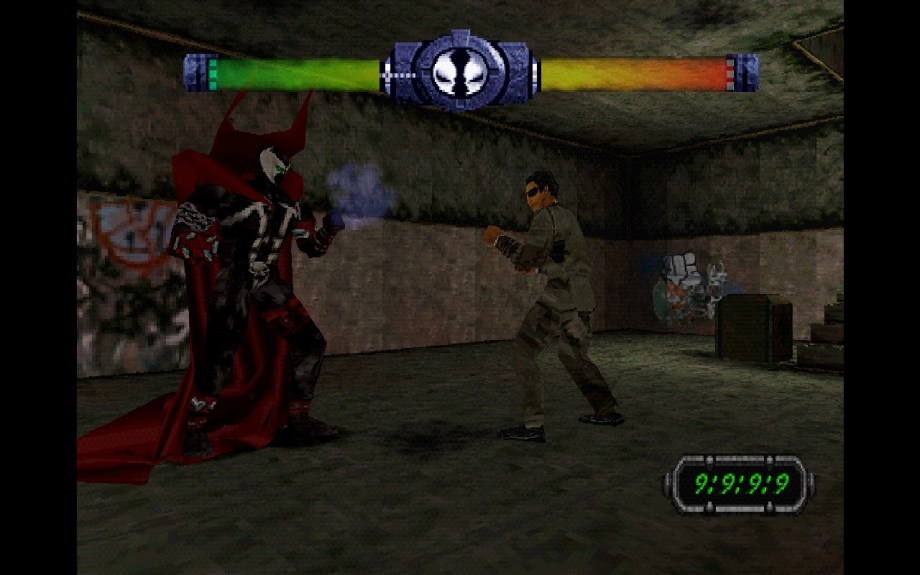
A screenshot of Spawn: The Eternal. Spawn is engaged in a fight in a train station
The game switches from platforming to combat similar to Wargods.

Spawn: The Eternal makes sense, right around the time when fans were reacquainted with the Hollywood film. A trusted developer who has had experience on the system works well in a new direction, lending their comic-book sensibility to this existing comic book property. If you wanted to put the smackdown on some goons or navigate a nightmarish depiction of late 90s New York, Spawn: The Eternal will satisfy if you’ve got a minute.

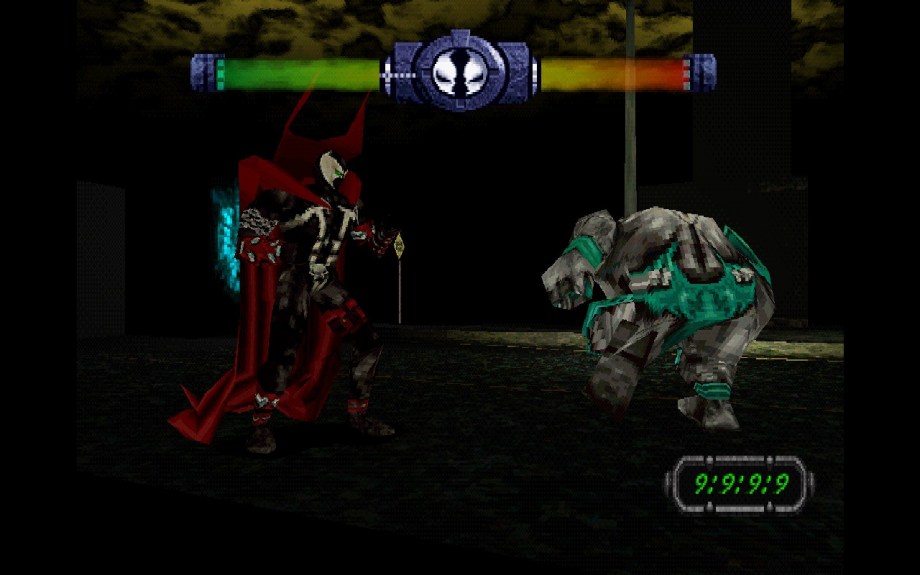
A screenshot of Spawn: The Eternal. Spawn is fighting some demon entity.
Spawn fights humans and demons with ease.

If you want more positive reviews delivered to the e-mail box of your choice, you can click on that little text bubble at the bottom of the screen. Do you agree or disagree? or have a suggestion for another pop-culture artefact that needs a positive light shone on it? Leave a comment in the comment box below! But remember to keep it positive!

The Godfather Part III (1990)

When it comes to your legacy, you hope that your actions are at least good enough to block out the other actions that you aren’t too proud of. You wish to end it on your terms, with the sunset facing ever forward. Life doesn’t tend to work out like that, but the fantasy is there. In 1990, when Michael Corleone thought he was out, he was pulled back in The Godfather Part III.

Trailer

With Michael Corleone now in old age, the legacy of his criminal actions still looms over him. Now he wants to step aside to provide a peaceful retirement for his family, especially his daughter, Mary. Problems relating to the most unlikely of places risk Michael’s exit strategy. Real-world and fictional tribulations will come to a head. In what would being the final instalment of the Corleone saga.

Trailer 1

The gang films have certainly been upended with the recent instalments, no small part due to the legacy left by the first two Godfathers. There has been a sea of imitators and proteges. III still shows that the franchise can stand on its own. While the tales of the Corleone family were supposed to be wrapped up in part 2, with its prequel sequel combination, financial pressure brought Coppola back in when he thought he was out. It is interesting seeing the later years of the criminal enterprise being shown through the eyes of the Corleone family. Taking both the rumours and stories from the latter half of the century of crime, complained with some good old-fashioned gangster scenes, that are a part and parcel of the genre.

TV Spot.

Despite the decade and a half, most of the familiar faces (who have survived the last two films) make a return. Both Al Pacino and Diane Keaton return to this ultimate send-off. We have some newcomers to reflect the passage of time, like Joe Mantegna, who, if his appearances in The Simpsons didn’t tip you off, is an excellent fit as Joey Zasa. We see Mary all grown up, too. It would have been nice to see Winona Ryder or the late Rebecca Schaeffer, but carrying on from her cameo as an infant, Sofia Coppola steps in as Mary once again.

TV Spot 2.

The Godfather Part III’s biggest issue is that it has to live with following both The Godfather and its sequel. On its own, The Godfather III would have been a perfectly enjoyable entry in a tale about an aged gangster being brought back in. Dealing with both the truth and the legend in the later years of the Cosa Nostra. At least this combination offers some entertainment value and a chance for some newer faces to shine. The franchise does have an ending, not opting to refuse the offer to end on its terms.

TV Spot 3

If you want more positive reviews delivered to the e-mail box of your choice, you can click on that little text bubble at the bottom of the screen. Do you agree or disagree? or have a suggestion for another pop-culture artefact that needs a positive light shone on it? Leave a comment in the comment box below! But remember to keep it positive!

Mobsters (1991)

The rise of organised crime came into its own with the organised part of the statement. Putting together such a system to coordinate the vast network of competing interests and power plays is no easy task, yet somehow, it came to be. In 1991, the tale of those who put the organised back in organised crime, in Mobsters.

Official Trailer 1

Following the rise of Lucky Luciano, and the infamous members of the Italian and Jewish gangs, mobsters including Bugsy Segal, Frank Costello, and Meyer Lansky. From their plucky origins on the crowded New York streets, to working with the established figures of the prohibition era crime. Their clashes with the old ways of doing things and their new ways may lead to innovations in the way that these mobsters operate. Putting the rise of the organisation into organised crime, and chronicling the origins of the Five Families system.

Official Trailer 2

With the critically acclaimed Bugsy on one side and Touchstone’s Billy Bathgate on the other, 1991 would prove to be an interesting year for films depicting the gangsters of yesteryear. Still, the rise of The Commission is as intriguing a topic for a film as ever. Even if you’re getting a little tired of seeing Tommy Guns and the rise and fall of those who use said Tommy Guns. There are flashes of style and brilliance in this telling of these mobsters, but also numerous scenes of guns, death, and violence that come with the territory for films like these.

TV Spot 1

Christian Slater leads as Lucky Luciano, taking over from Stanley Tucci from Billy Bathgate, still turning heads after his stint in Heathers a few years back. Alongside him is McSteamy himself, Patrick Dempsey, as Meyer Lansky. It is clear that this film is loaded with heartthrobs, putting customers in seats based on star power alone, but the assembled cast does well in their roles. There are other power players, including the late great Michael Gambon and F. Murray Abraham, representing the older guard of the pre-organised crime families. They all come together to help tell this story of the Mafia before it took hold in the heart of U.S. popular culture.

TV Spot 2

Mobsters demonstrates the plucky ingenuity of its subject by trying to be leaner and meaner during the making and the presentation. Slater et al. manage to turn heads as both the infamous Lucky Luciano and the other founding members of The Commission. The rise of this modern way of Organised Crime is an interesting subject for a film, and one that feels rare in a genre that feels well-trodden in media. While there may have been stiff competition for mobster films in the early 90s, if you were considering any other films, forget about it.

TV Spot 3

If you want more positive reviews delivered to the e-mail box of your choice, you can click on that little text bubble at the bottom of the screen. Do you agree or disagree? or have a suggestion for another pop-culture artefact that needs a positive light shone on it? Leave a comment in the comment box below! But remember to keep it positive!